
“Sherry embodies leadership. She shares perspective and advice forged by a career and life of resilience and growth.”
Joy P. – Global CISO
Every organization that brings Sherry to its stage gets three things that are genuinely rare in the keynote world.
Your audience will know they were seen, not serviced.
Sherry speaks in formats that match what your event actually needs, not what fits a standard speaker template.
All engagements begin with a discovery conversation. Pricing is available upon inquiry.

For executives, senior leaders, HR conferences, women’s leadership events, healthcare organizations, and any audience navigating the intersection of professional excellence and personal complexity
You are in the meeting. You are hitting the numbers. You are holding the team together with both hands.
And in the other hands, the ones nobody in that room can see, you are holding something else entirely.
A medical diagnosis. A caregiving season. A grief that does not pause for quarterly reviews. An invisible life running parallel to your visible one, quietly costing you things that no performance review has ever measured and no leadership development program was ever designed to address.
This is the keynote for that leader.
Both Hands Full is Sherry’s most personal and most universally resonant keynote. It reframes the invisible weight that high-performing leaders carry not as a liability to be managed in private but as the precise source of their deepest authority. The leaders who have held the most are not diminished by what they carried. They are made of it. And when they learn to lead from that integration rather than in spite of it, something remarkable happens in every room they enter.
Audiences leave this keynote with a new vocabulary for integrated leadership, the Harmony Hero™ Framework as a practical map for leading from their whole self, and the profound relief of finally being seen in the fullness of who they are.
Audiences leave knowing: Why the things they were told to leave at the door are precisely what make them extraordinary in the room, how to build leadership presence from integration rather than compartmentalization, and how to create cultures where the full person is welcomed as the full professional.
The room sounds like: Quiet recognition in the first ten minutes. Then laughter. Then the kind of stillness that happens when someone finally says the thing everyone has been thinking.
For leaders navigating change, disruption, and the relentless pressure to be all things in an environment that will not stop shifting
In the 1930s, a company called Kutol Products was dying.
They made wallpaper cleaner, a soft, moldable putty people used to remove soot from their walls. Then washable paint arrived and made them obsolete overnight. The product that had built their business was suddenly worthless.
Until a nursery school teacher named Kay Zufall walked into her classroom and noticed the children. They were not cleaning walls. They were building things. Sculpting. Creating. She called her brother-in-law at Kutol and said four words that changed everything: this is not wallpaper cleaner.
He reformulated it. He made it non-toxic and colorful. He renamed it Play-Doh. Within a decade, a failed industrial product had become one of the most iconic toys in history.
The substance did not change. The form did. The essence held. The shape transformed.
This is the Play-Doh Principle. And it is the single most important leadership competency in a world that will not stop demanding that you be different tomorrow than you were today.
The leaders who fail under pressure are not the ones who lack vision. They are the ones who mistake rigidity for strength, who hold so tightly to the form that they snap when the wave arrives. The leaders who sustain their influence through disruption, through growth, through the inevitable seasons of organizational transformation, are the ones who have mastered strategic pliability: the ability to reshape the form while protecting the essence, to adapt the systems while preserving the story, to bend without breaking and emerge still recognizably themselves.
This keynote teaches that skill. Practically, specifically, and with a framework that works on Monday morning, not just in the moment of inspiration.
Audiences leave knowing: The difference between collapsing under pressure and reshaping through it, how to identify their organization’s core versus its form, and the five practices from the Harmony Hero™ Framework that keep leadership pliable without making it shapeless.
The room sounds like: Surprise in the opening story, then the slow dawning recognition of every leader who has ever gripped something too tightly and watched it crack.
For forward-thinking organizations navigating the integration of artificial intelligence without losing the human culture that makes them worth working for
Artificial intelligence is the most significant transformation in the history of work.
Most organizations are responding to it by asking the wrong question. They are asking: what can AI do? They are optimizing workflows, automating processes, measuring efficiencies, and building dashboards that tell them more about their operations than they have ever known before.
They are not asking: now that AI handles more of what used to require human effort, what remains that only humans can do? And are our leaders actually doing it?
The Human Frequency answers that question. Directly. Provocatively. With the kind of specificity that most keynotes on AI and leadership quietly avoid.
What remains irreplaceably human is not kindness as a concept or empathy as a buzzword. It is the capacity to carry a room. To read the unspoken dynamic and name it. To build a culture so grounded in a shared story that no algorithm could replicate its feeling. To lead in a way that people can feel before you have said a word, because your presence itself communicates something that no dashboard can quantify.
Sherry brings her two decades of marketing strategy and brand-building, her deep work in influence and organizational culture, and the Harmony Hero™ Framework to one of the most urgent questions facing leaders in every industry. The organizations that will win in an AI-integrated world are not the ones with the best tools. They are the ones whose leaders have developed the one capacity AI cannot train: the human frequency, the ability to be felt in a room, to connect at the level where decisions are actually made, and to build cultures that run on something deeper than efficiency.
Audiences leave knowing: The specific human capacities that become exponentially more valuable as AI advances, how to build a leadership culture that leverages technology without surrendering the human story at its center, and why presence, not process, is the competitive advantage that cannot be automated.
The room sounds like: Urgency in the first act. Relief in the second. By the close, leaders have a language for what they knew was missing but could not name.
For CEOs, executive teams, marketing and HR leaders, and organizations where the strategy is solid but the culture is not keeping up
You have the strategy. You have the talent. You have the vision on the wall and the values in the handbook.
And somehow your organization still sounds like six instruments playing six different songs in six different rooms.
Meetings end without momentum. Initiatives launch without traction. Brilliant people protect their territory instead of building something together. You are managing friction that should never have existed, and somewhere underneath the noise, the mission that started all of this is getting harder and harder to hear.
This is not a talent problem. It is not a strategy problem. It is a harmony problem. And it has a specific, teachable solution.
From Silos to Symphony takes audiences inside the story-meets-system gap that quietly fractures alignment in growing organizations. When an organization’s story and its systems drift apart, the culture does not collapse dramatically. It erodes. Gradually. Silently. Until the best people are gone, the energy is spent on politics instead of progress, and the leader wonders how something so promising became so loud.
Using the Harmony Hero™ Framework and the Harmony Check diagnostic, Sherry shows leaders exactly where the drift is happening and how to become conductors of momentum rather than managers of friction. The result is not a more compliant organization. It is one that moves with genuine rhythm, where people collaborate not because they are required to but because the story and the systems are finally saying the same thing.
Audiences leave knowing: How to run the Harmony Check diagnostic and identify the precise point where their story and systems have separated, the three dimensions of influence that rebuild alignment without force or mandate, and how to create organizational rhythm that outlasts any single leader in the room.
The room sounds like: Recognition in the first act. Clarity in the second. By the close, people are already texting each other about what they need to change on Monday.
Event planners and HR directors who bring Sherry in are not looking for a motivational speaker who leaves the audience feeling temporarily inspired. They are looking for a keynote that shifts something real. Something that changes how people lead on Tuesday morning, not just how they felt on Friday afternoon.
The organizations that resonate most with her work share a few common threads. They are navigating complexity that pure strategy cannot solve. Their teams are talented but not fully in rhythm. Their leaders are carrying more than the organizational model accounts for. And somewhere in the culture, the story and the systems have drifted apart in ways that everyone can feel but few can name.
If that sounds like your organization, you are in the right place.
Sherry speaks to:



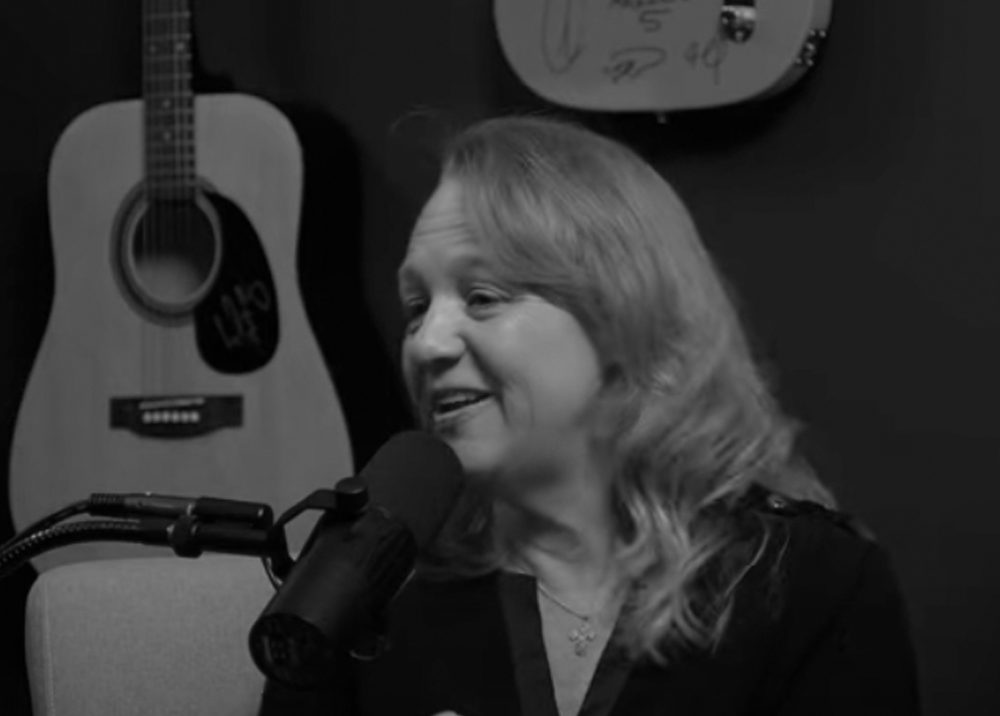
Booking begins with a conversation. Tell Sherry about your event, your audience, and what you want them to walk out carrying. She will tell you exactly how she can make that happen.